Chicken Adobo
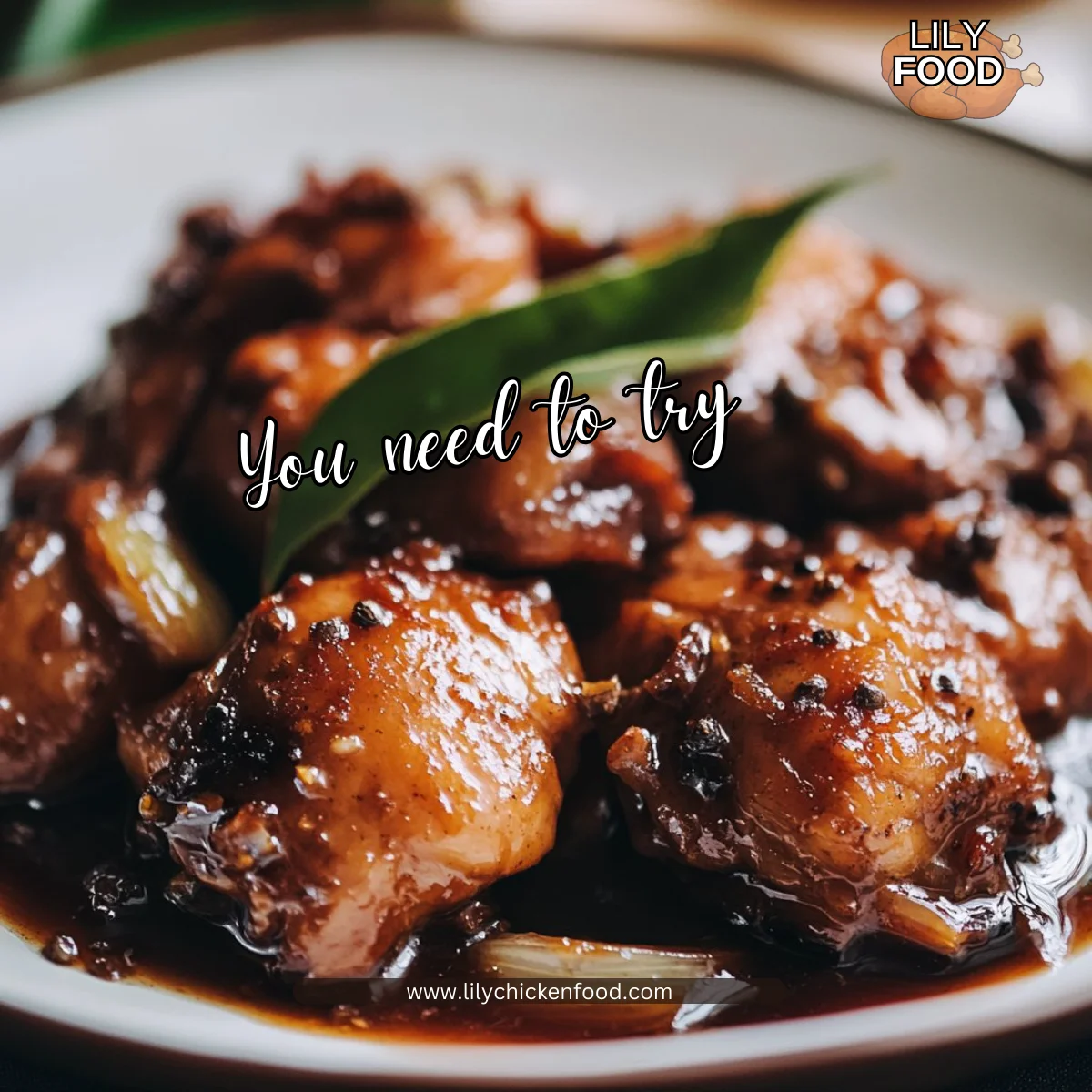
The kitchen smells like warm vinegar and garlic, and the gentle hiss of simmering sauce feels like a welcome song. I often catch my kids peeking in the doorway when the aroma starts to fill the house. That sound of family gathering is part of why I love making chicken adobo.
This recipe is one I return to when I want comfort food that is simple and true. If you enjoy quick weeknight meals, you might also like my recipe for 30-min oven baked boneless skinless chicken thighs, which shares the same homey spirit and simple prep.
Why this works
Family Friendly and Time Saving
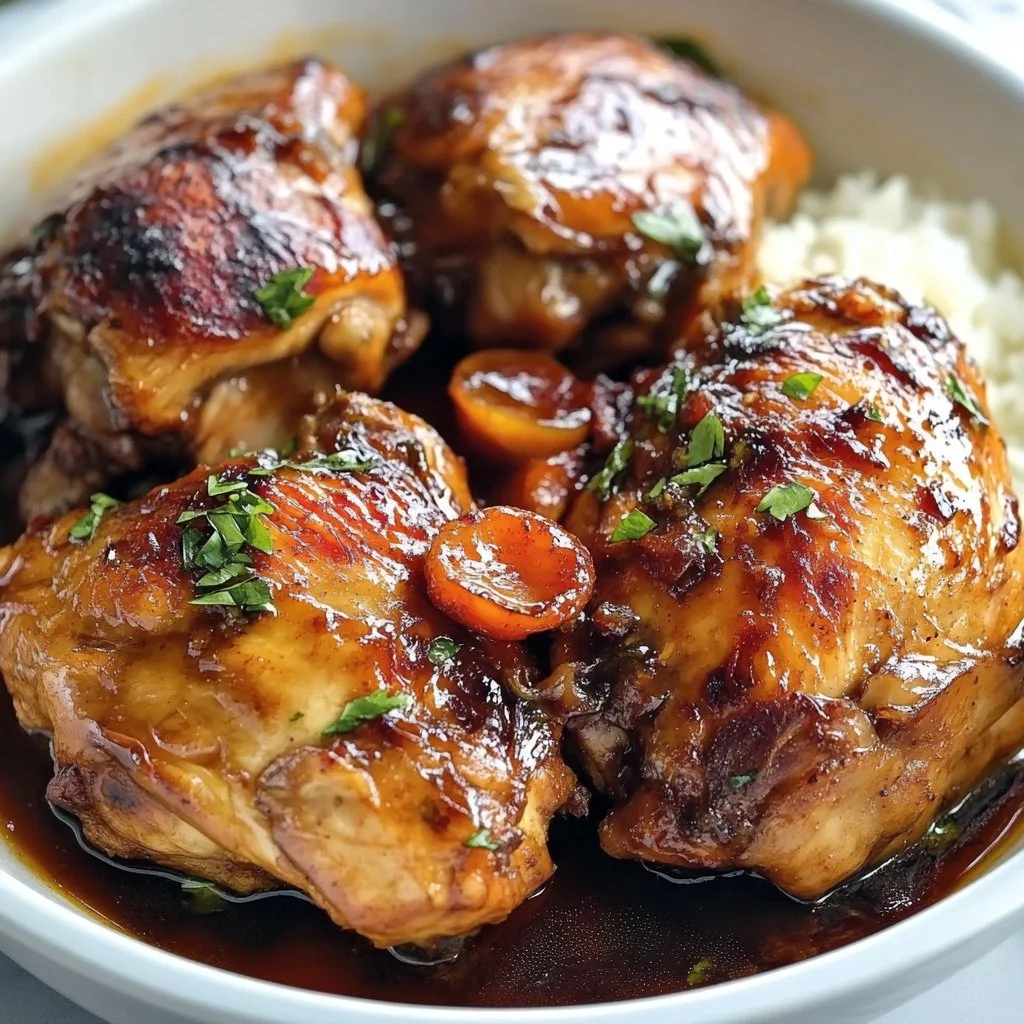
Chicken adobo uses pantry staples and gentle cooking that lets flavors develop without fuss. It is forgiving, so even busy weeknights become a celebration. Marinating for a short time gives the meat an instant lift, and the slow simmer makes the chicken tender enough for little hands to enjoy.
This dish stretches well and tastes even better the next day, making it perfect for leftovers and batch cooking. If your week needs more easy wins, try pairing it with a quick rice bowl like my 30-minute teriyaki chicken bowl for another family favorite.
Process Overview
“This is where the magic happens—when the aroma fills the kitchen.”
I like to think of adobo as a gentle balance of savory and bright. You marinate, then simmer. The sauce reduces and glazes the chicken. The steps are clear, and each one adds a layer of flavor. If you are curious about adapting cooking methods, I sometimes shift to an oven finish or use my air fryer for crispier skin when time allows. For those methods, see my notes about air fryer chicken breasts for helpful timing ideas.
Ingredients
- 2 lbs chicken
- Tip: Use bone-in, skin-on thighs for extra flavor and tenderness. If you prefer white meat, breasts work too but watch the cooking time.
- 1 cup soy sauce
- Tip: Use a low-sodium soy sauce if you want more control over salt. Taste before adding extra.
- 1 cup vinegar
- Tip: Cane vinegar or white vinegar both work. Apple cider vinegar gives a softer tang.
- 6 cloves garlic, minced
- Tip: Fresh garlic adds bright heat. If you are making a big batch, you can double the garlic for a bolder profile.
- 2 bay leaves
- Tip: Bay leaves add savory depth. Remove them before serving.
- 1 teaspoon black peppercorns
- Tip: Whole peppercorns give gentle heat while simmering. Crush a few at the table if you want more zip.
- 1 tablespoon sugar
- Tip: Sugar balances the acidity. Brown or white sugar both work. Start with a tablespoon and adjust to taste.
- 1 onion, sliced
- Tip: Yellow onion softens and adds natural sweetness. Slice thick so it holds up during simmering.
- 1 cup water
- Tip: This keeps the sauce glossy and controls salt intensity. Add more if you want more sauce.
- Salt to taste
- Tip: Salt at the end so you can adjust after reduction.
My kitchen tests have shown that these simple amounts give a reliably balanced sauce that pleases adults and kids alike. If you want a deeper caramelized finish, you can reduce the sauce further at the end.
Directions
- In a bowl, combine soy sauce, vinegar, garlic, bay leaves, peppercorns, sugar, and onion. Marinate the chicken in this mixture for at least 30 minutes.
- Encourage: Give it time to soak in the flavors. If you are short on time, even 30 minutes will help. I sometimes marinate overnight on the weekend.
- Heat a pan over medium heat and add the marinated chicken with the marinade.
- Encourage: Lay the pieces skin side down first if using skin-on chicken. Listen for a gentle sizzle. This step helps render fat and build flavor.
- Add water and bring to a boil.
- Encourage: Boiling wakes up all the aromatics. Stay nearby so you can adjust the heat if the pot tries to bubble over.
- Reduce heat and simmer for 30-40 minutes until the chicken is cooked and tender.
- Encourage: Simmer low and slow. The chicken becomes tender and the sauce mellows. I stir gently now and then and spoon the sauce over the pieces.
- Taste and adjust seasoning with salt if necessary.
- Encourage: Tasting is my favorite part. Add a pinch of salt if it needs it, or a touch more sugar if it feels too sharp.
- Serve hot over rice.
- Encourage: Spoon sauce over both chicken and rice. Let the family dig in together for a cozy meal.
If you want a crisp finish, lift the chicken pieces out and broil them on a baking sheet for 3 to 5 minutes until the skin browns. Or transfer to an air fryer for a few minutes to tighten the skin; check my guide for air fryer chicken skewers for timing ideas when cooking smaller pieces.
Serving
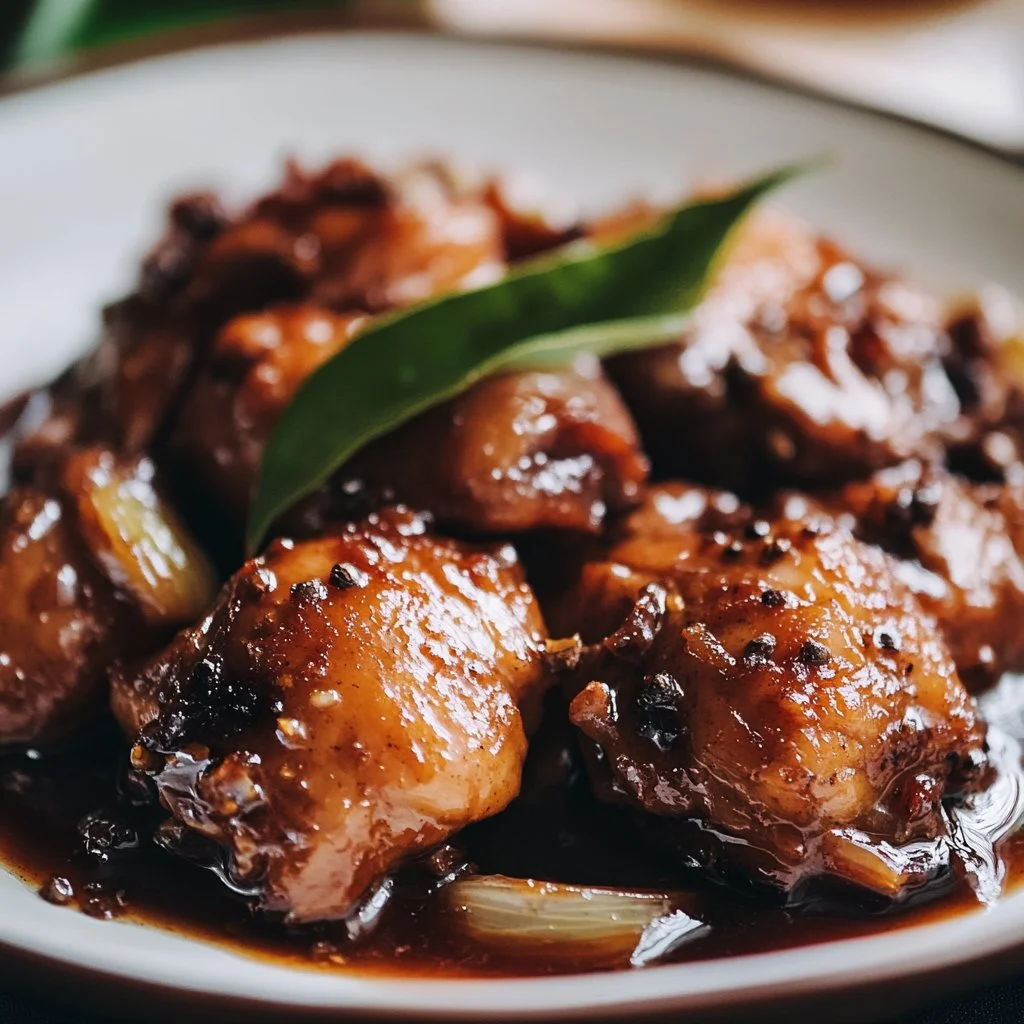
Serve this adobo family-style in the center of the table. A big bowl of steamed white rice is the perfect partner. Add simple sides like steamed greens, a crisp cucumber salad, or fried plantains for a bit of sweetness.
For a casual weeknight, place the platter in the middle and let everyone serve themselves. This keeps things relaxed and encourages conversation. If you want to dress it up, garnish with chopped scallions and a few toasted sesame seeds.
If you have little ones, shred a few tender thighs and plate them with a milder drizzle of sauce. For older kids and adults, offer lime wedges or crushed peppercorns at the table.
To add a playful twist, make rice bowls with a soft-cooked egg and pickled vegetables. The mixture of textures makes every bite interesting and helps picky eaters sample new flavors. For other family bowl ideas, you might enjoy my take on air fryer chicken wings nights when you want party-style food.
Storage
Store leftover adobo in an airtight container in the refrigerator for up to 4 days. The flavors mature and often taste better the next day.
To reheat, warm gently on the stove over low heat with a splash of water. Cover the pan and heat until the chicken reaches a safe temperature. If you prefer, reheat single servings in the microwave for 1 to 2 minutes, stirring halfway through.
For longer storage, freeze portions in freezer-safe containers for up to 3 months. Thaw overnight in the refrigerator before reheating. When reheating from frozen, defrost fully and warm slowly to preserve texture.
Kitchen Notes
- Use bone-in thighs for the juiciest results. They hold up in the sauce and stay tender.
- If you want a darker, richer sauce, remove the chicken at the end and reduce the sauce over medium heat until glossy.
- Swap vinegar types to change the profile. Apple cider vinegar is milder, white vinegar gives a brighter tang.
- For less salt, use low-sodium soy sauce and add salt to taste after reduction.
- If you want a spicy kick, add sliced chilies or a pinch of red pepper flakes during simmering.
These small shortcuts save time and keep dinner stress free. Over the years, I have learned which tweaks give the most consistent results for busy families.
Variations
- Kid friendly: Reduce the vinegar to 3/4 cup and add an extra tablespoon of sugar. This keeps tang gentle and sweet.
- Spicy: Add 1 to 2 sliced chilies or 1/2 teaspoon red pepper flakes during the simmer.
- Low sodium: Use low-sodium soy sauce and skip added salt until the end of cooking.
- Oven finish: After simmering, transfer to a 400 °F oven for 10 minutes to brown the top. Watch carefully to avoid burning.
- Vegetarian option: Simmer tofu or seitan in the adobo sauce and reduce until the sauce coats the pieces.
Each of these variations keeps the spirit of adobo while tailoring it to your family’s needs. I often mix approaches depending on what my kids will eat that night.
FAQ
What cut of chicken is best for adobo?
Bone-in, skin-on thighs are ideal for flavor and tenderness. If you prefer white meat, use breasts but reduce simmer time to prevent drying.
Can I make this ahead of time?
Yes. Adobo tastes great the next day. Store in the fridge for up to 4 days or freeze portions for up to 3 months.
Is vinegar necessary?
Yes. Vinegar gives adobo its signature bright note. You can adjust the amount to your taste, but do not omit it.
Can I use a slow cooker?
Yes. Brown the chicken first if you like, then add the marinade and cook on low for 4 to 6 hours. The sauce will be milder, so taste before serving.
How can I thicken the sauce?
Remove the chicken and reduce the sauce over medium heat until it reaches a glaze. You can also whisk in a teaspoon of cornstarch mixed with a tablespoon of water for a quicker finish.
Conclusion
I hope this recipe brings warmth and ease to your table. Chicken adobo is a recipe that welcomes family, conversation, and second helpings. If you want to explore traditional and modern takes on this classic, this guide from Filipino Chicken Adobo (Flavour Kapow!) – RecipeTin Eats offers a well-tested perspective, and this version on Chicken Adobo – Food52 provides useful technique notes and variations.
Thank you for cooking with me. Leave a note about how your family liked it, and tell me which tweaks made it a keeper in your home.
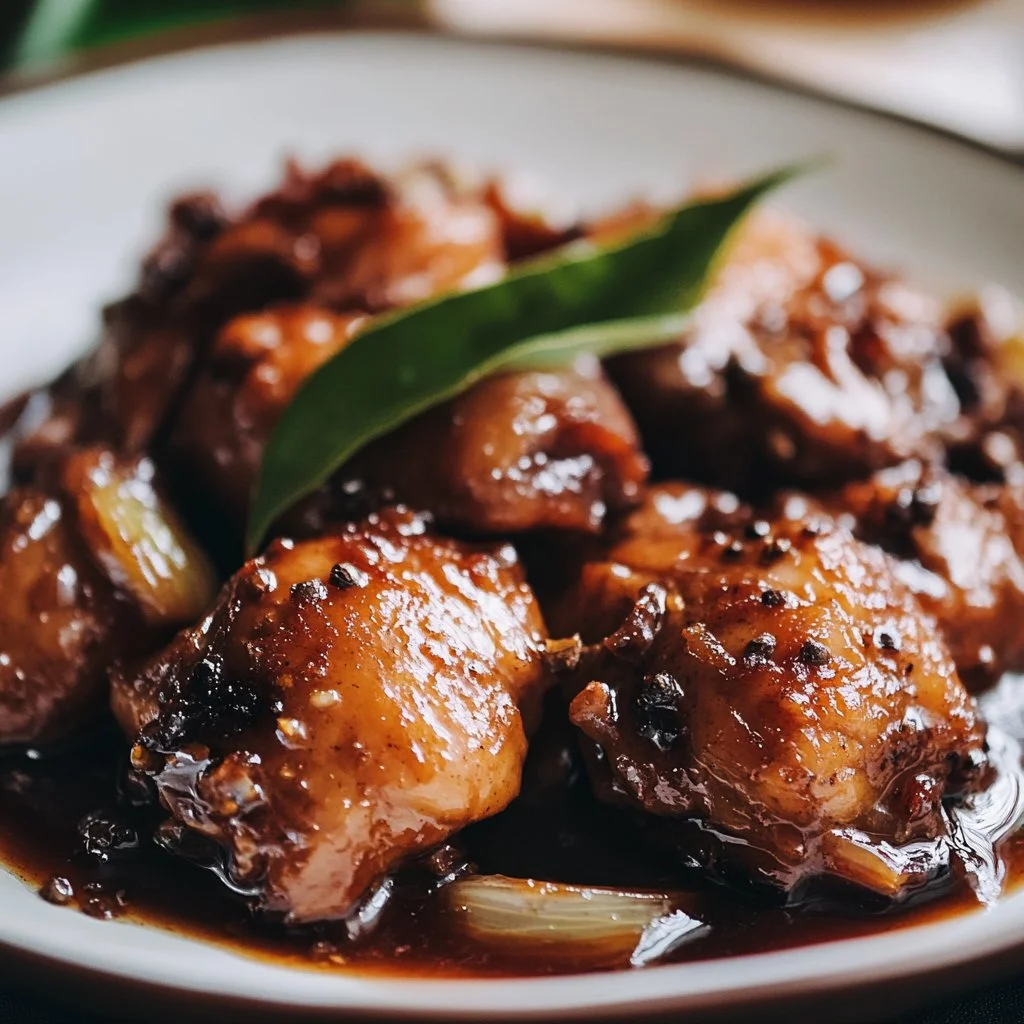
Chicken Adobo
Ingredients
Method
- In a bowl, combine soy sauce, vinegar, garlic, bay leaves, peppercorns, sugar, and onion. Marinate the chicken in this mixture for at least 30 minutes.
- Heat a pan over medium heat and add the marinated chicken with the marinade.
- Add water and bring to a boil.
- Reduce heat and simmer for 30-40 minutes until the chicken is cooked and tender.
- Taste and adjust seasoning with salt if necessary.
- Serve hot over rice.
- For a crisp finish, lift the chicken pieces out and broil them on a baking sheet for 3 to 5 minutes until the skin browns.