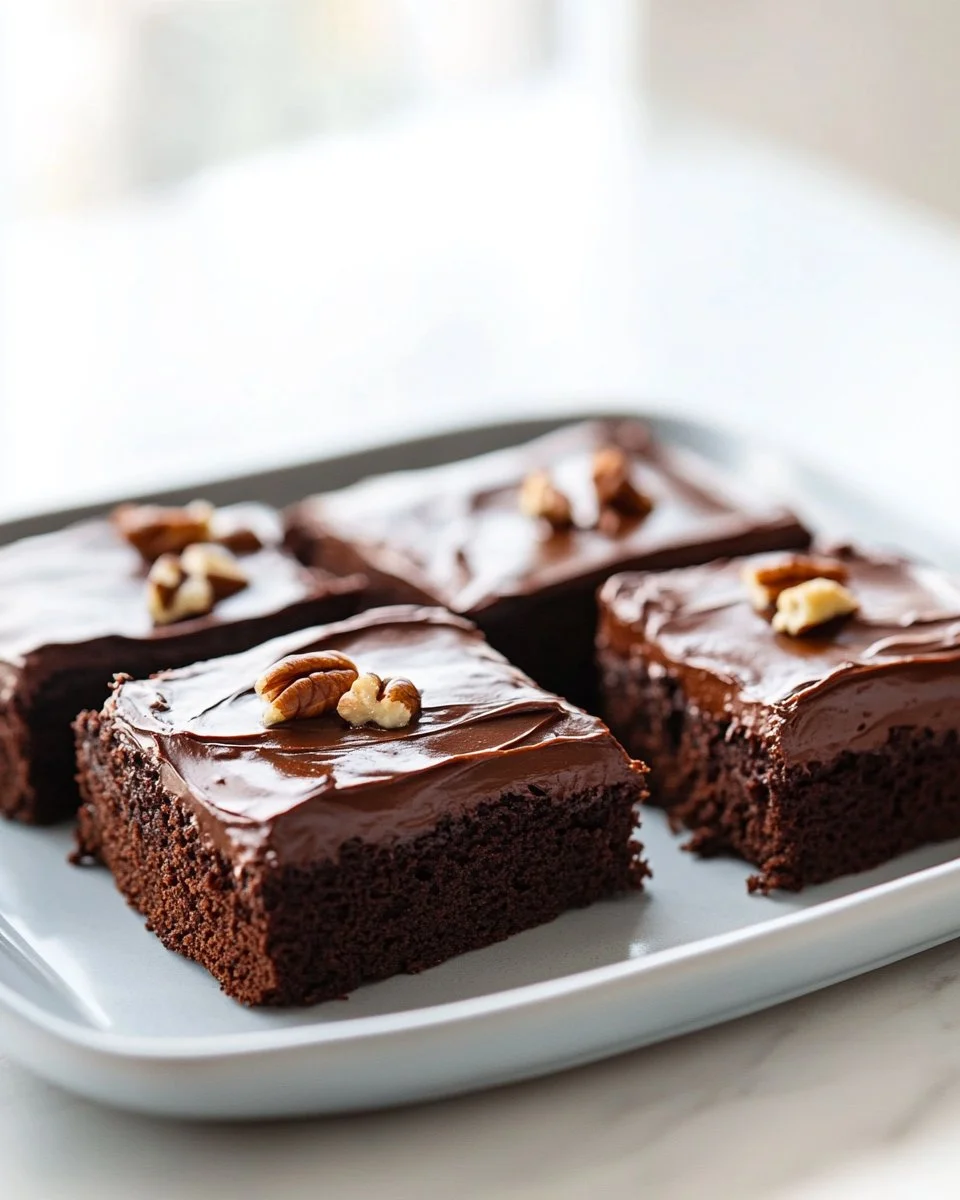
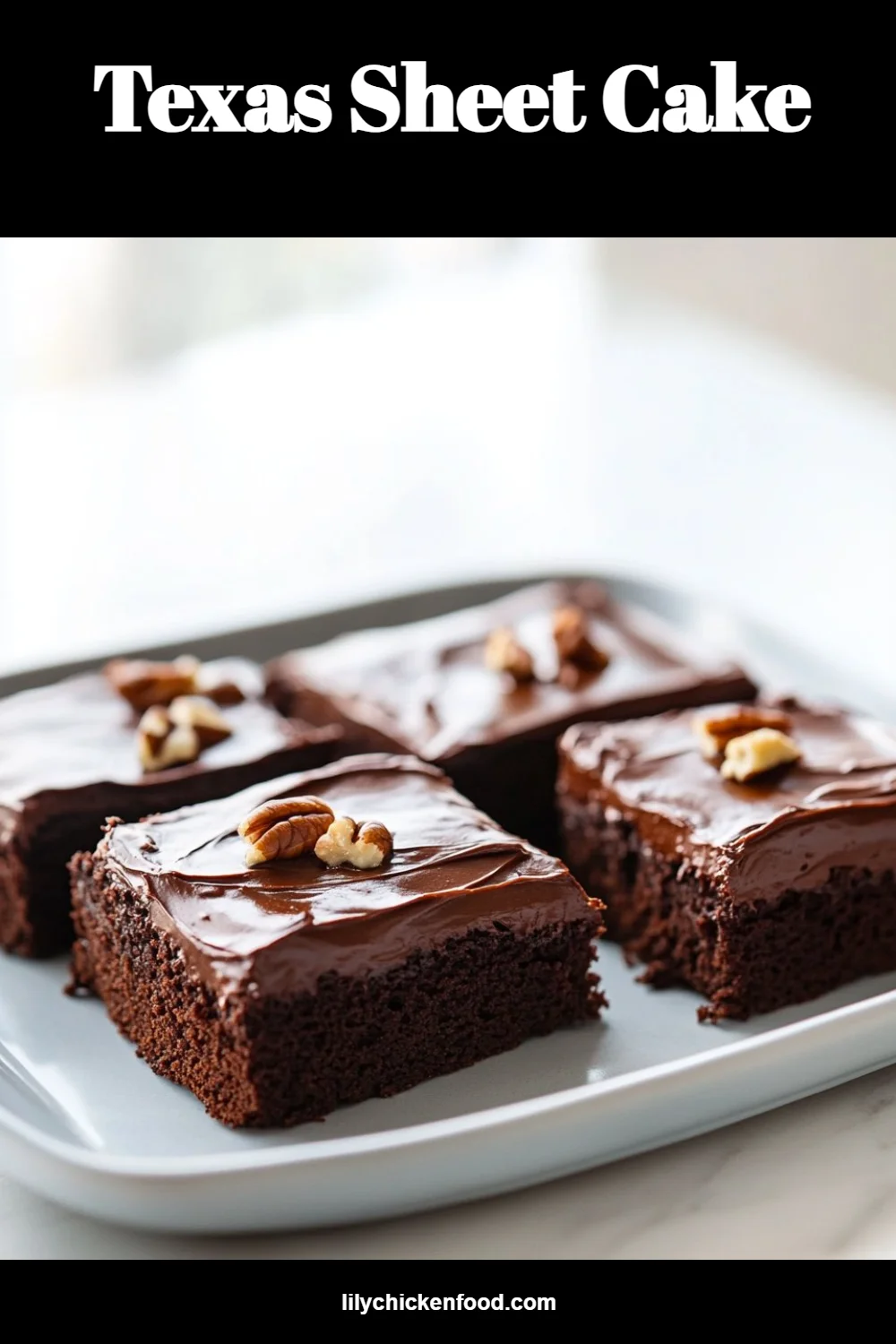
Texas Sheet Cake
I remember the sound of my daughter running in from the back porch, sneakers squeaking, right as the kitchen filled with the warm smell of chocolate and butter. The tray of cake was just sliding into the oven and the whole house seemed to pause for a second, like everyone was holding their breath for dessert. That small hush before the first forkful is one of my favorite kitchen moments.
Why This Texas Sheet Cake Feels Like Home
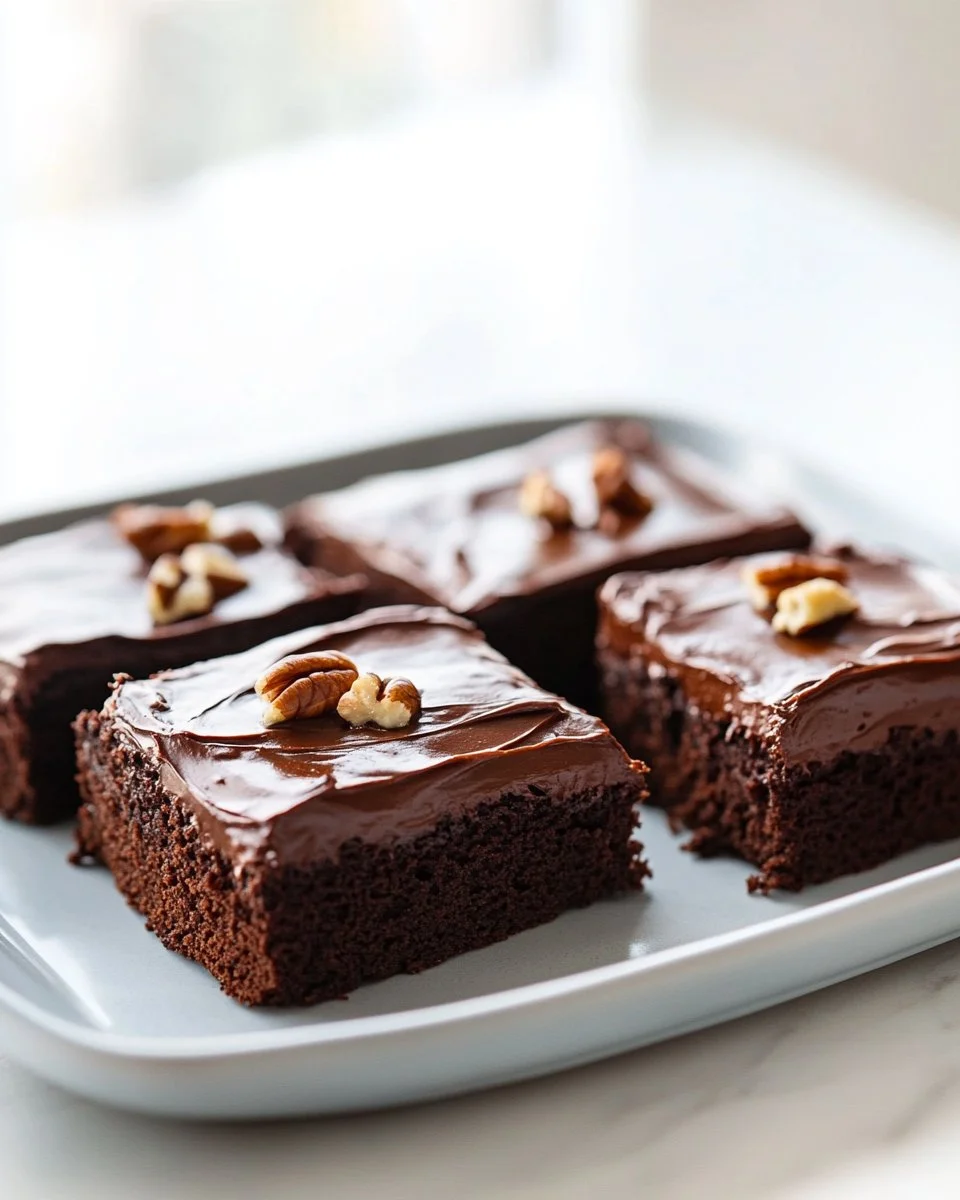
This cake puts chocolate and ease together in a way that feels familiar and right. It bakes in one large pan, so there is less washing and more time to sit with family. The top becomes glossy with that classic fudgy frosting while the crumb stays moist and tender.
I love how it feeds a crowd without fuss. It’s the kind of recipe I make when friends drop by or when we need a quick dessert after a week of busy nights. 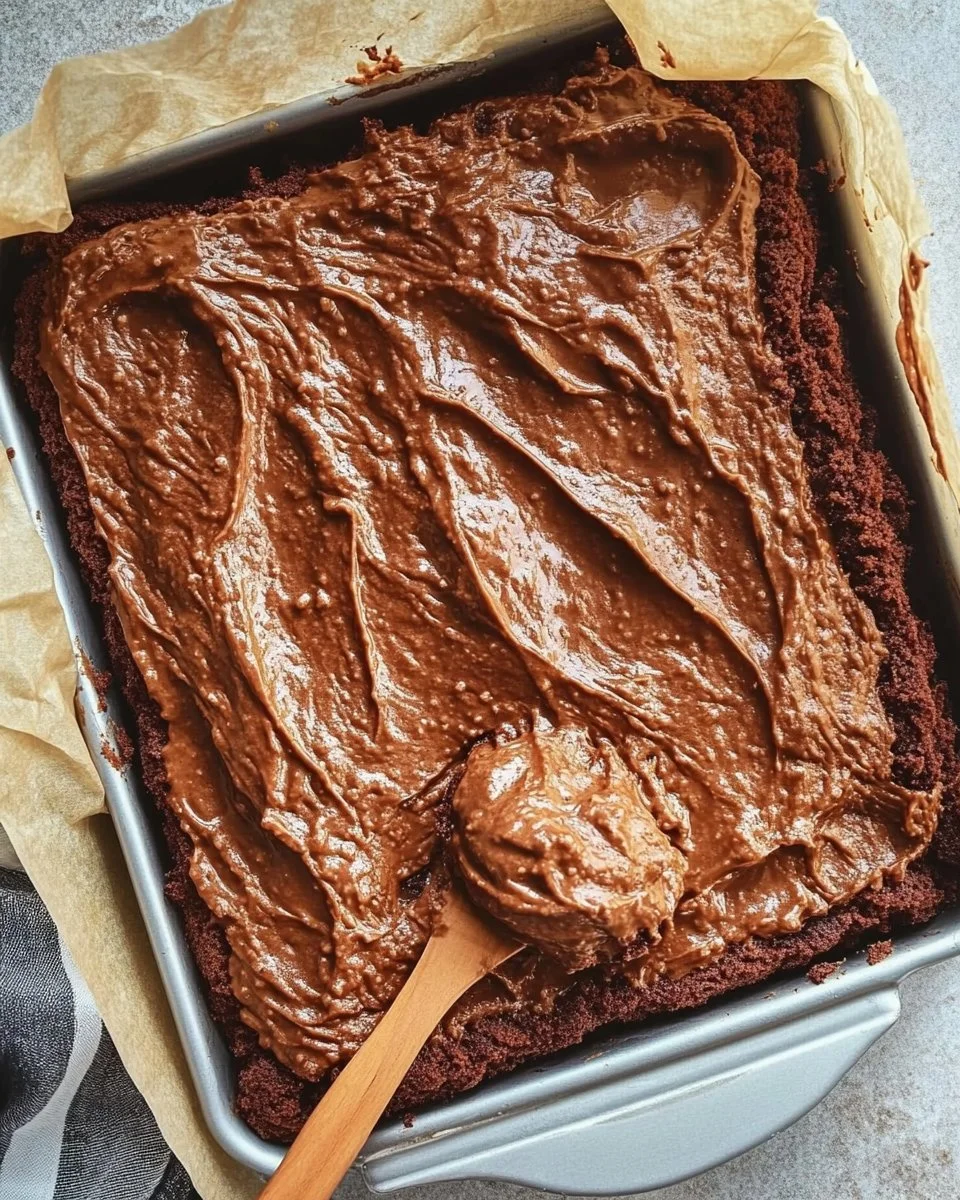
There are memories folded into every bite. My grandmother used to make a version of this that smelled like Sunday afternoons. I keep one eye on the oven and another on the clock, because it always feels faster than the calendar says.
How to Make Texas Sheet Cake, The Heartwarming Way
Here’s the short, friendly version of how this happens: mix dry and wet, add hot water to melt the cocoa and make the batter silk, bake until a toothpick comes out clean, then pour glossy, buttery frosting over the warm cake so it sets into a crackly top.
“This is where the magic happens—when the aroma fills the kitchen and my kids come running in, asking ‘Is it ready yet?’”
You will notice the batter looks loose after you add boiling water. That is correct. The batter thins and becomes glossy, which helps the cake stay moist and bake evenly. When it’s in the oven watch for a dark, even color across the top and a little spring when you touch it gently. Those are the signs you’re on track.
Ingredients You’ll Need
2 cups all-purpose flour
2 cups sugar
1/2 teaspoon salt
1 teaspoon baking soda
1 cup unsweetened cocoa powder
1 cup buttermilk
1 cup vegetable oil
4 large eggs
2 teaspoons vanilla extract
1 cup boiling water
1/2 cup unsalted butter
1/4 cup milk
3 1/2 cups powdered sugar
1 teaspoon vanilla extract
1/2 cup chopped nuts (optional)
Friendly note: Don’t stress if you do not have buttermilk. A quick swap is 1 cup milk with 1 tablespoon white vinegar or lemon juice, stirred and left to sit for 5 minutes. Use what’s in your fridge; this cake is forgiving and made for real life.
Step-by-Step Directions
-
Preheat your oven to 350°F (175°C). Grease and flour a large sheet pan.
Make sure the pan is truly large—this cake spreads thin. I use a rimmed cookie sheet and it works great. -
In a large bowl, combine flour, sugar, salt, baking soda, and cocoa powder.
Whisk well so the cocoa dissolves into the dry mix and there are no lumps. -
In another bowl, mix together buttermilk, vegetable oil, eggs, and vanilla.
Whisk until smooth and the eggs are fully incorporated. -
Gradually add wet ingredients to dry ingredients, mixing until just combined.
Don’t overmix here; a few small streaks are okay. Overworking will make a tougher cake. -
Finally, stir in boiling water until the batter is smooth.
The batter will be thin. That’s how we get a tender, moist crumb—this is intentional. -
Pour the batter into the prepared pan and bake for 30-35 minutes or until a toothpick inserted in the center comes out clean.
Rotate the pan halfway through if your oven has hot spots. The cake browns quickly at the edges. -
While the cake is baking, prepare the frosting by melting butter in a saucepan. Stir in cocoa powder and milk, bring to a boil.
Boiling helps the sugars dissolve and gives the frosting that glossy texture. Watch it closely so it does not scorch. -
Remove from heat and add powdered sugar and vanilla, whisking until smooth.
If the frosting seems thick, add a splash more milk. If too thin, whisk in a tablespoon more powdered sugar. -
Once the cake has cooled slightly, pour the frosting over the cake and sprinkle with chopped nuts if desired.
Pour when the cake is still warm so the frosting sets up with those classic cracks and glossy peaks. -
Allow the cake to cool before serving.
Cooling lets the frosting firm a bit so you get clean slices. If you can, wait 20-30 minutes—it’s worth it.
Quick tip: Let the kids help with step 8. They love watching the frosting thicken and you get a moment to breathe.
Serving Texas Sheet Cake with Love
I serve this cake family-style on the counter so everyone can help themselves. A wide spatula and small plates work better than forks for neat pieces. It’s such a crowd-pleaser that there is rarely a piece left unclaimed.
Pair it with simple sides like vanilla ice cream, a spoon of whipped cream, or a few fresh berries to cut the richness. My son loves his with cold milk; my partner prefers a scoop of vanilla over a warm piece. The cake is flexible and welcomes these small rituals.
If you want to be a little fancy, sprinkle flaky sea salt over the frosting right after you pour it. The salt highlights the chocolate and makes each bite sing.
Storage & Reheat Tips (Keeping the Goodness)
Store leftover cake in an airtight container at room temperature for up to 3 days. If your kitchen is warm, place it in the fridge to stop the frosting from getting sticky. It will still be moist the next day.
For longer keeping, wrap slices tightly and freeze for up to 2 months. Thaw in the fridge overnight, and bring to room temperature before serving.
Reheat a single slice in the microwave for 10-15 seconds for a quick, cozy treat. For a near-just-baked feel, warm a slice in a 300°F oven for 5-7 minutes. The oven revives that freshly-baked texture and lifts the aroma back into the room.
My Kitchen Notes & Shortcuts
- Use boxed cake mix in a pinch: mix with a cup of strong brewed coffee instead of water and follow the rest of the steps for a faster weeknight version.
- Prep ahead: make the frosting a day early and store in the fridge; warm gently before pouring over warm cake.
- Nuts are optional: chopped pecans are classic, but skip them if someone in your family has allergies.
- Pan swap: if you prefer a thicker cake, use a 9×13 pan and extend the bake time by 8-10 minutes. Check with a toothpick.
- Kid-friendly step: give the kids the powdered sugar for step 8. It is safe and they love the cloud of sugar.
These small tricks keep the process manageable while keeping the soul of the recipe intact.
Family-Friendly Variations
Want to make it your own? Here are a few gentle twists that our family tries now and then.
- Nut-free: omit nuts and add a handful of mini chocolate chips to the batter for extra pockets of chocolate.
- Lighter: swap half the oil for applesauce. The texture shifts slightly but it still feels indulgent.
- Boozy twist for grown-ups: stir a tablespoon of coffee liqueur into the frosting for depth. Keep kids out of the mixing for that one.
- Peanut butter topping: drizzle warmed peanut butter over the frosted cake for a southern twist my kids adore.
- Glazed berries: top slices with a quick compote of berries and a teaspoon of sugar for a bright contrast to the chocolate.
Invite your family to suggest their favorite change. This cake was meant to be shared and rewritten over time.
FAQs About Texas Sheet Cake
Q: Can I make this ahead for a busy week?
A: Absolutely. Bake a day ahead and store it covered at room temperature or in the fridge. Let it sit an hour before serving so flavors settle.
Q: My frosting looks grainy. What went wrong?
A: Often that is from adding cold powdered sugar to a hot mix too fast. Whisk slowly and heat gently, or add a teaspoon of milk at a time to smooth it out.
Q: The cake was dry. How can I fix that next time?
A: Make sure you add the boiling water and do not overbake. Ovens vary, so start checking at 25 minutes. A few moist crumbs on the toothpick mean you are done.
Q: Can I use Dutch-process cocoa instead of natural cocoa?
A: Yes, but adjust expectations: Dutch-process is less acidic and can shift the flavor slightly. If you swap, use high-quality cocoa and do not worry—your cake will still be delicious.
Q: How do I get those glossy cracks on top of the frosting?
A: Pour the frosting over warm cake. The contrast of warm cake and cooling frosting makes the top set with that lovely crackle.
One Final Thought from My Kitchen
This cake is more than a dessert. It is an invitation to slow down for a few minutes, pass plates around, and make a small memory. I have pulled it out for birthdays, late homework nights, and surprise guests. Each time, it returns the same kind of quiet joy to the table.
Give it a try even on a Tuesday. Let the hot chocolate smell fill your house and listen for the footsteps that mean family is coming. You might be surprised how a simple tray of cake can knit everyone together for a little while.
Conclusion
If you want a deeper walk through a classic Texas Sheet Cake method, I like the clear, step-by-step notes in this Texas Sheet Cake guide from Tastes Better From Scratch for comparison and inspiration. For a rich, very chocolate-forward take that families have loved, see the helpful breakdown in The Pioneer Woman’s Best Chocolate Sheet Cake.
Until next time, happy baking. If this cake finds its way into your family stories, know that a little kitchen magic just made someone smile.
Texas Sheet Cake
Ingredients
Method
- Preheat your oven to 350°F (175°C). Grease and flour a large sheet pan.
- In a large bowl, combine flour, sugar, salt, baking soda, and cocoa powder. Whisk well so the cocoa dissolves into the dry mix.
- In another bowl, mix together buttermilk, vegetable oil, eggs, and vanilla. Whisk until smooth.
- Gradually add wet ingredients to dry ingredients, mixing until just combined. Do not overmix.
- Stir in boiling water until the batter is smooth. The batter will be thin.
- Pour the batter into the prepared pan and bake for 30-35 minutes or until a toothpick inserted in the center comes out clean.
- While the cake is baking, prepare the frosting by melting butter in a saucepan. Stir in cocoa powder and milk, bring to a boil.
- Remove from heat and add powdered sugar and vanilla, whisking until smooth.
- Once the cake has cooled slightly, pour the frosting over the cake and sprinkle with chopped nuts if desired.
- Allow the cake to cool before serving, letting the frosting firm a bit.
- Serve family-style and pair with vanilla ice cream, whipped cream, or fresh berries.